Who Works In Coworking Spaces?

Over the last two decades, since the invention of coworking spaces as a concept, there has been a dramatic growth in the global demand and supply of coworking office space. What first started as a workspace trend in the US has now developed right across the UK, particularly driven by demand in London and the main UK regional office markets.
Evolving Coworking Market
Since 2017, the growing market has continued its upward trajectory and dominated office market headlines, as a diverse range of occupiers continue to seek much more flexibility with workspaces. This trend has continued, driven by an evolution in working practices across the UK.
Flexibility remains the watch word with coworking and this makes the concept very popular with freelancers, remote workers, entrepreneurs, start-ups and tech companies.
Space can be taken for as long or short a time as is required, normally for a fixed monthly fee, which covers internet access, meeting rooms and other shared facilities. Workspaces are usually accessible 24/7 and make it easy for customers to balance their day around work and other commitments. Some users like to go every day and some pop in a few times a week - that’s the benefit - you can decide.
Who Uses Coworking Space?
Flexibility remains the watch word with coworking and this makes the concept very popular with freelancers, entrepreneurs, remote workers, start-ups and tech companies.

Flexible For Freelancers
Freelancers, particularly those involved in the tech and creative sectors, tend to value the autonomy of the flexible set-up that coworking space offers, but it can also offer a degree of structure and routine in their working day.
Working from home day in, day out can make it hard to find and maintain motivation, or avoid all the household distractions that inevitably seep through into the working day. There’s the laundry, cleaning, gardening all screaming for attention, not to mention daytime TV or your favourite series. And, in the other direction, it can be hard to switch off from work when your workplace is also your home. Having a separate place to go and work, even some of the time, can help create a clear separation between the two aspects of your life.
For those who normally work alone, using a coworking space helps them feel part of a community, which helps with inspiration and network building, reducing the isolation that can sometimes accompany the freedom of freelancing.
Excellent For Entrepreneurs
Coworking is a cost-effective option for entrepreneurs and fledgling start-ups. At the early stages of starting a business, money tends to be tight and plans tend to change quickly. With this option, you only need to hire the desk or desks that you need, and you’re not tied down to a long-term contract, so it’s easy to expand, contract or change direction at short notice if that’s how the business evolves.
Working alongside other business people in the coworking space helps to create an innovative and dynamic business environment, ideal for ambitious start-ups. It can also offer access to a useful network of freelancers who can contribute to the fast growth of a business without excess overheads.
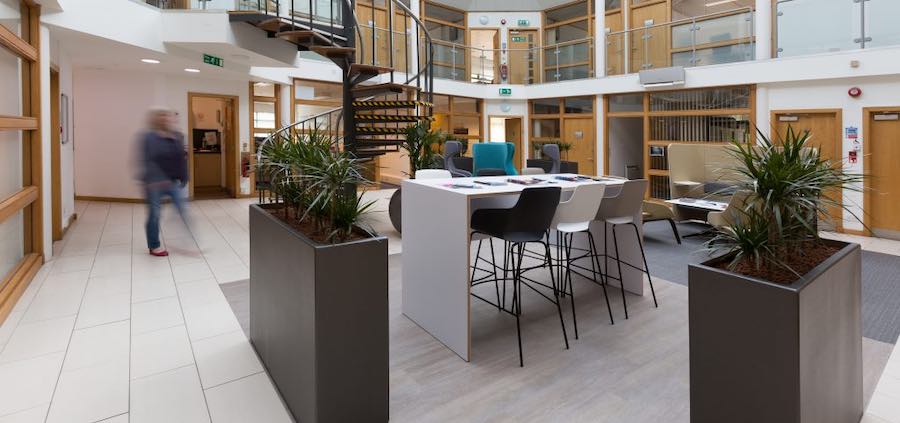
Perfect For Projects
Coworking space can also be a beneficial concept for larger more established employers, who are looking to take advantage of the flexibility, perhaps for key projects or contracts, where additional space is required for a limited period of time.
In the last decade, high-skilled outsourcing has created jobs and business growth in the UK regions in particular. Larger employers are increasingly looking to outsource back office functions to small, highly skilled and tech-orientated specialists and coworking space provides the perfect workspace for accommodating these agile teams for short timeframes.
Right For Remote Workers
The working from home phenomenon, although somewhat losing its shine, is definitely here to stay in some form or other. It is the norm to find offices full of life on Wednesdays, Thursdays and Fridays while the roads and town centres appear quieter on Mondays and Fridays. While many workplaces have settled into this hybrid routine, what of the workers who work from home permanently, either because there is no central office for them to visit, or because they are too far away to drop in regularly?
Remote workers can be extremely productive, as they have no tiring commute and no annoying distractions from coworkers. However, without the human contact found in an office some people find that their motivation can dip and their mental health may even start to suffer as they feel lonely or isolated.
In these situations, employers would be wise to offer remote workers the use of a desk in a coworking space for at least part of the week, helping boost morale, improve motivation and ultimately retain valued team members.

Best For Banks
In the UK, banks and consultancy firms have also warmed considerably to coworking, as a means of adding flexible workspace to their traditional offices, as and when required.
For financial and consulting firms, the ability to scale office space up or down quickly is essential. Projects can be cyclical, teams may expand for specific engagements, or new client requests might demand a temporary presence in a different city. Coworking spaces provide this on-demand flexibility, eliminating the need for fixed, long-term leases on traditional office space that will lie empty when a project ends.
The agility of coworking allows firms to respond rapidly to market changes, allocate resources more efficiently, and keep overheads to a minimum. For example, a consulting firm might hire a block of desks in a coworking space in a client's city for the duration of a project, rather than opening a satellite office.
Coworking offers a more predictable, often lower, operational expenditure model. All-inclusive memberships cover most overheads, simplifying budgeting and reducing admin at the same time. The cost efficiency of this model is particularly attractive in an economic climate where all expenses are scrutinised.
For employees, they can benefit from working closer to home rather than travelling to a new area, or collaborating with colleagues in different locations on a temporary basis. This contributes to the recruitment of top talent and the retention of valuable employees, particularly younger generations who expect more dynamic work options.

Great For Growth
Companies expanding into new markets or regions may require additional or satellite space on a temporary basis, whilst the operation becomes established and they identify what space will be required going forward. Coworking space provides a perfect short-term solution for individuals or teams while the business leaders work out what the structure of the business will look like in that region in the longer-term.
For firms looking to test new markets or establish a presence without significant upfront investment, coworking spaces offer a low-risk solution. An accountancy business might use a coworking space to pilot a new service line in a specific city, or a law firm could establish a temporary base to serve a particular client cluster. This allows for market research and business development with minimal commitment, providing valuable insights before committing to a larger, more permanent footprint.
Coworking At The Core
There seems to be something special and unique about coworking spaces that has caught the imagination of occupiers, with a diverse array of individuals and businesses who are drawn to the concept of collaborative work in a shared environment. This unique appeal stems from a blend of flexibility, community, and innovation that traditional office setups often struggle to replicate.
The rise of coworking has transformed the office market. What was once a niche offering has evolved into a vital component, with occupiers now widely expecting a flexible coworking option to be available to them. This shift is set to continue in the ever-changing UK office market, where agility and adaptability are top of the priority list for many teams.
The trend towards flexible working, alongside the appetite for freelancing, shows no signs of abating, continuing to redefine how and where people choose to work. The ability to scale up or down, access a vibrant community, and foster a dynamic work culture are now an integral part of the UK office space market.